Age
Pinholes And Rust-Through
- You See
- Daylight through the panel, or flakes that crumble at a scrape.
- What It Means
- Coating cannot hold steel that is gone. Those sheets are replaced first.
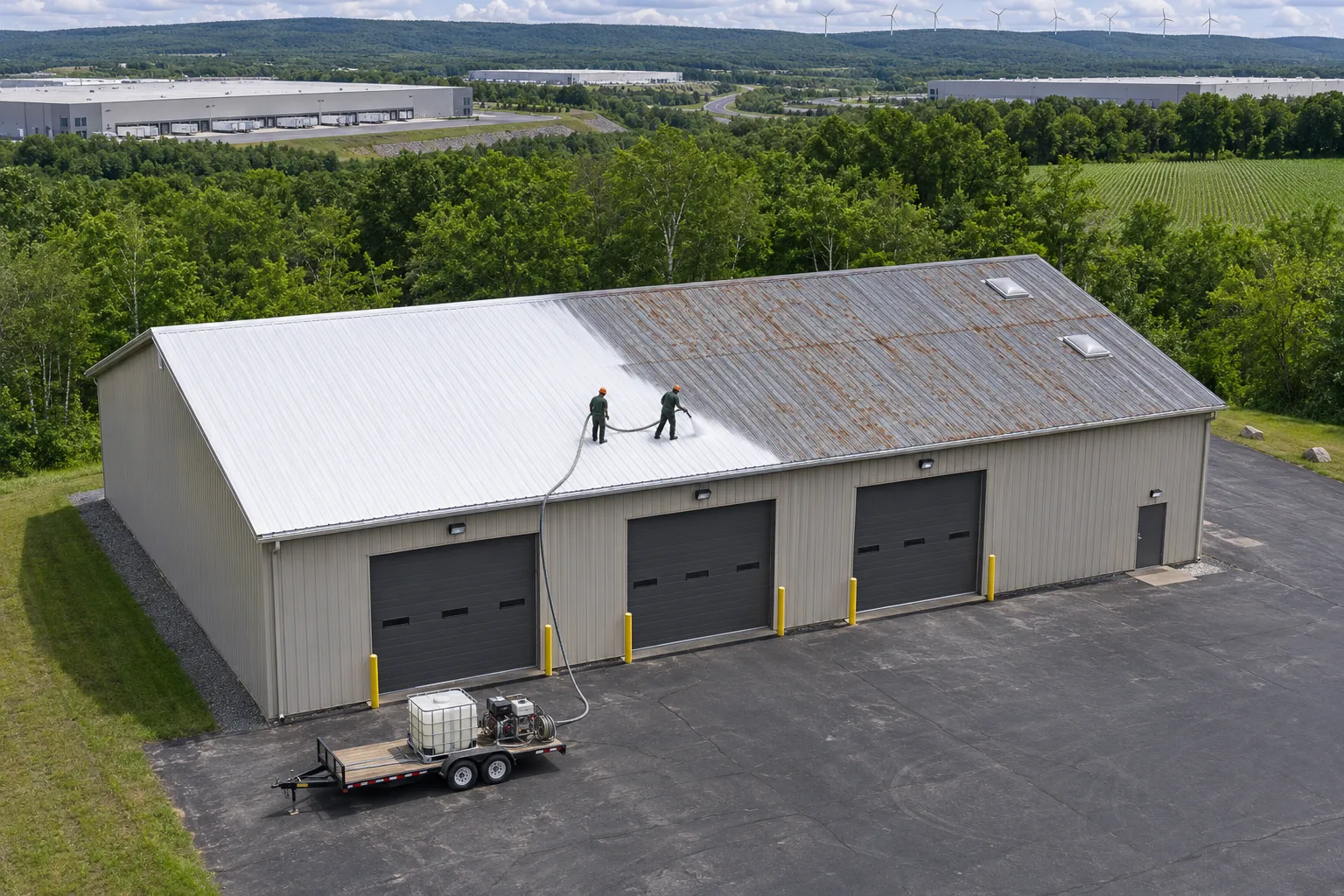
As a Pottsville metal roof coating contractor, we replace perforated panels on commercial shops first, then coat the whole roof so new and old metal work as one.
Pottsville metal roof coating on an older shop often begins with a few sheets that rusted through. Those come out first and are replaced with matching profile steel, primed to suit the coating. We also check the panels beside them, because visible holes are often only part of the corrosion.
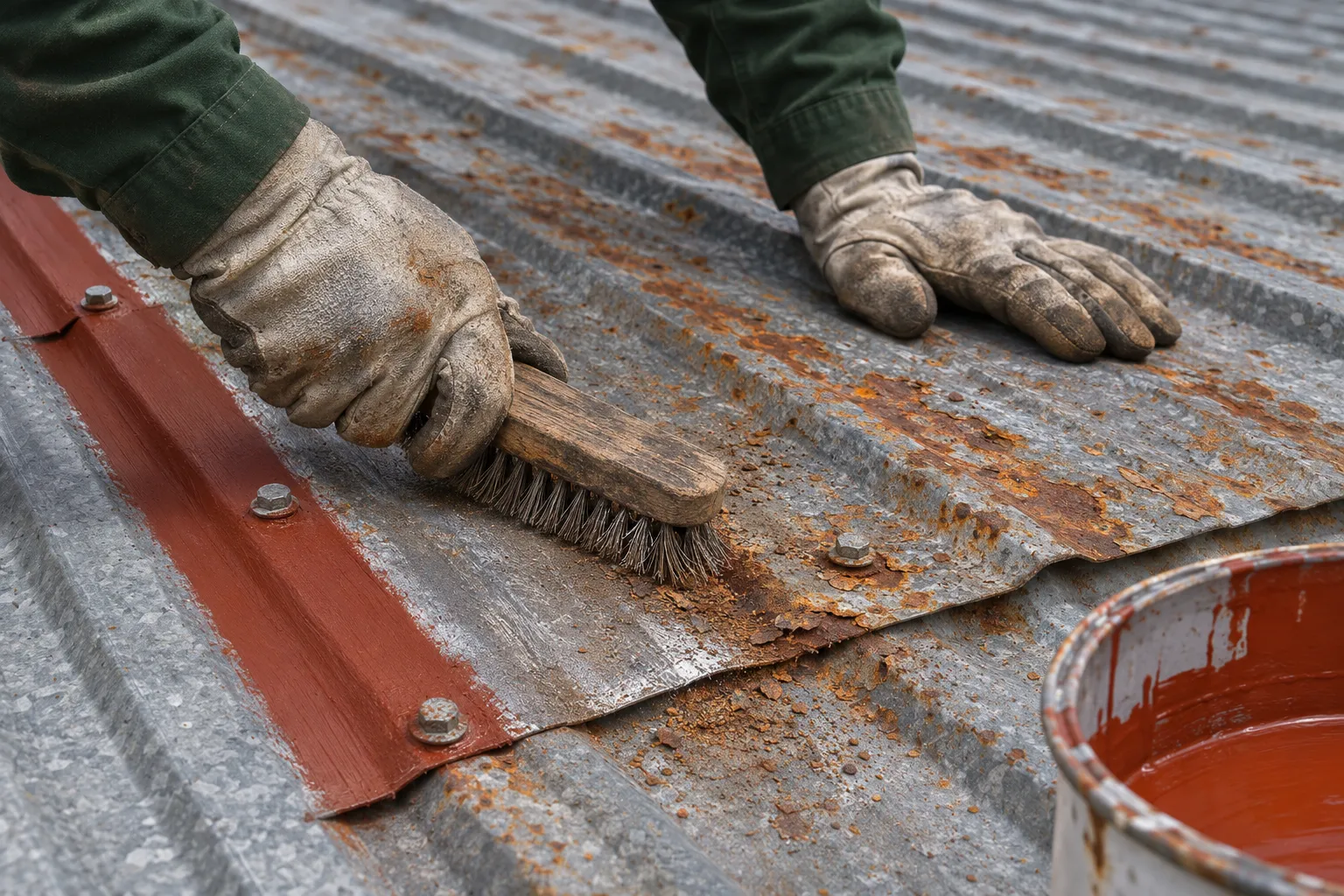
Older shop roofs usually show these four conditions together.
Replacing a few panels and coating the rest keeps an older shop roof working. Here is why it pays off.
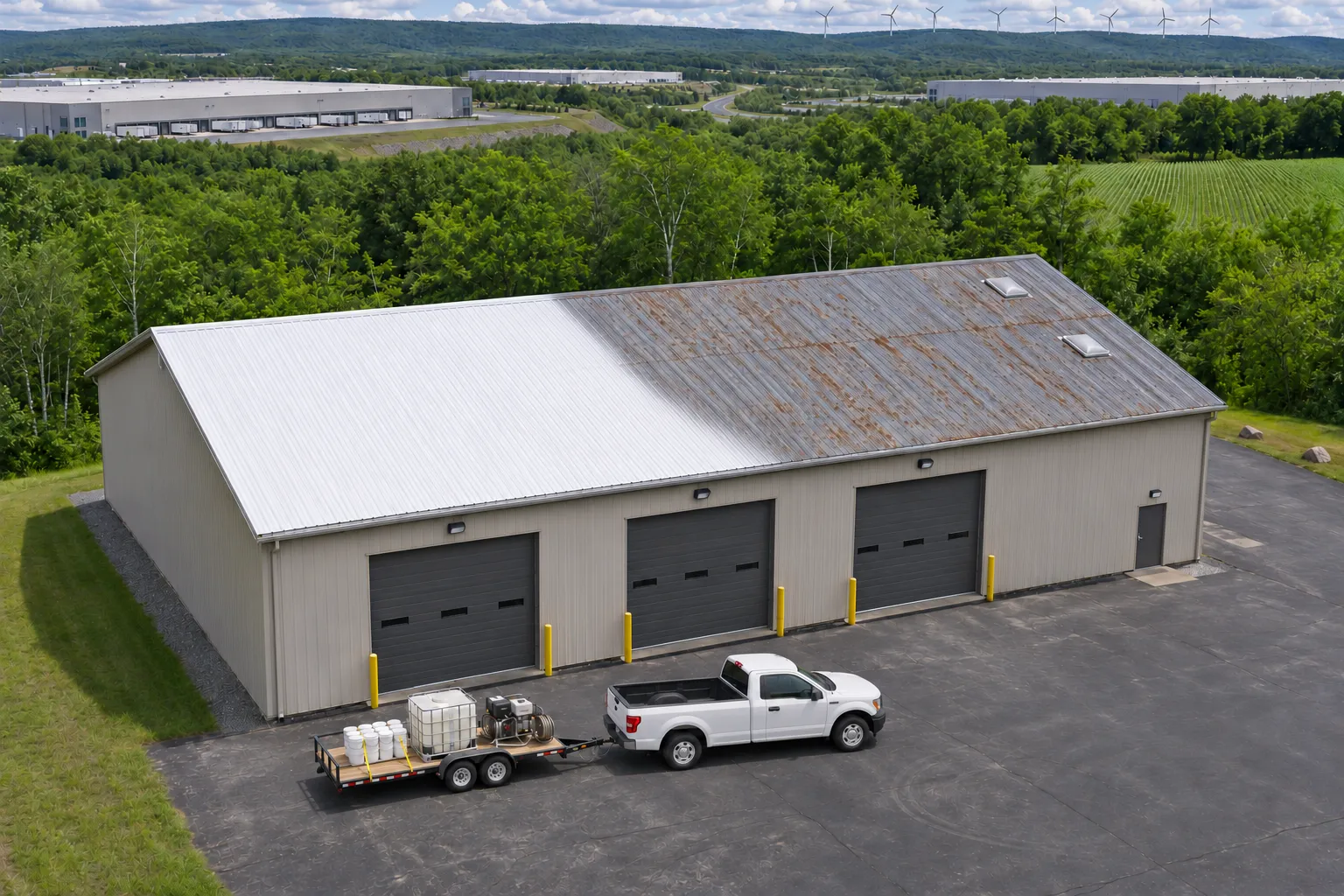
Only the sheets that rusted through are bought new; the sound ones stay. A sketch of which sheets were replaced goes into the job file.
Primer and coating make the replaced sheets and the original panels look and wear alike. Over time, the new panels and the old ones age at the same pace under the same topcoat.
Both old laps and the new ones from the panel swap get sealed under the coating. New laps get the same fabric and sealant as the original joints.
Treated original panels stop rusting at the rate they were. Primed rust spots are rechecked at each yearly visit.
How much metal gets replaced decides which path a Pottsville shop roof takes.
A handful of bad sheets are replaced, then the full roof is restored and coated. The panel swap and coating happen in one visit when weather allows.
A whole slope or bay of thin steel is replaced, then coated with the rest. Insulation under the replaced section is checked and changed if wet.
Where steel is still solid, the work stays at the screws and laps. Every screw is checked by hand and resealed or replaced.
After the panel swap, foam can bury the corrugations and add insulation. The foam also covers the new laps from the panel swap.
Holes in a few panels rarely mean a whole new roof. Start with a planning range.
Metal replacement comes first, then the same coating steps as any steel roof.
Every panel near a hole is probed, purlins are checked for grip, and the replacement sheets are counted and marked. A marked sketch shows every sheet to be replaced.
Rusted-through sheets come out, wet insulation goes, and matching panels are fastened in with sealed laps. Each new sheet overlaps the old ones in the direction water flows.
New panels get the primer the coating needs, and rust on the original panels is cleaned and primed. New panels with a factory finish get a bonding primer.
All screws and laps are sealed, and base and top coats go over the whole roof. New and old laps get fabric before the base coat.
A sketch shows which panels are new, useful when the roof is inspected later. The sketch is kept with the photo record of the job.
Pottsville is one of the towns we cover from Hazleton. Not on the list? Call us or write to us about the roof.
Warehouse bays coated in phases with tight stopping points.
Bottling roofs prepped with product and intakes protected.
Workshop roofs opened up and leaks traced first.
Edge metal, gutters, and closures repaired on block roofs.
Answers for shop owners with older metal roofs.
Yes. Perforated panels need replacement or a properly designed repair before coating. We inspect the panels around them too, since visible holes are often only part of the corrosion, and we make sure the new metal and its finish suit the coating at every new lap and screw.
The new sheets also get the same primer and coating as the rest, so the whole roof wears alike.
Coating plans out at about $2.50 to $4.00 per square foot of roof. Panel replacement adds the cost of the new sheets and labor on top, so the count of bad panels matters most. A count of bad panels during the inspection gives you a clear number for that part of the work.
For panels with holes or steel that crumbles, yes. Surface rust on firm steel gets cleaned and primed instead. The scrape test on the roof decides which panels are which. A scraper or an awl tells the difference quickly: firm steel resists it, and rotten steel gives way.
It works when the purlins hold screws and most of the panels are firm. Older shop roofs often fit that, with a few bad sheets and many worn screws. Purlins get checked too, since screws need solid framing to grip after the coating goes on.
The coating gives both the same color and finish. The profile is matched so laps nest tightly, and the new sheets are primed to suit the coating. Lap direction is set so water always flows over the joint between new and old sheets.
Get a planning range, or call to have the bad panels counted and the rest of the roof checked.