
Hidden Water
Leaks That Travel Inside
- You See
- Drips that show up far from where water gets in.
- What It Means
- Water runs along purlins before it drops. We trace it from inside first.
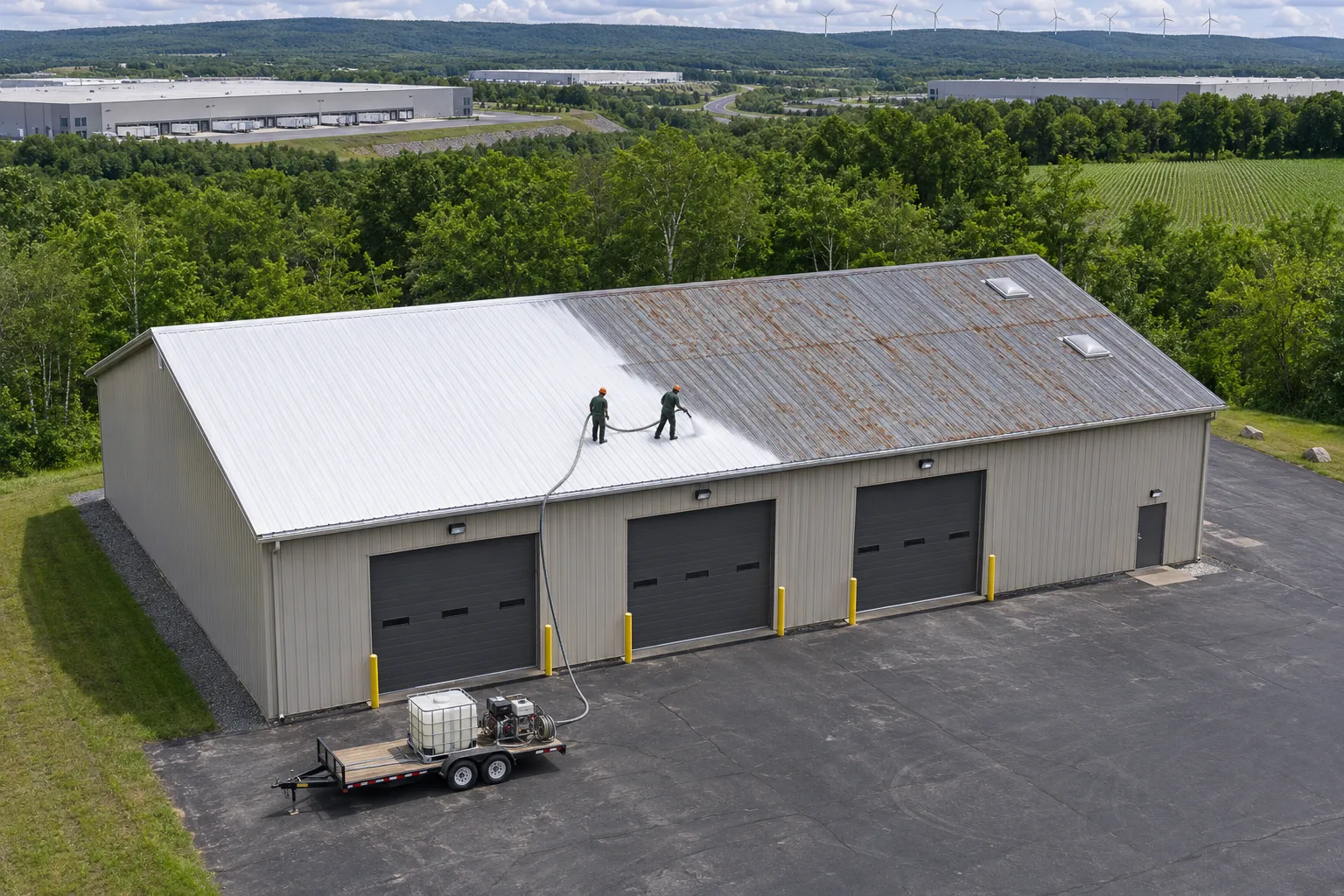
As a Catasauqua metal roof coating contractor, we coat workshop and small industrial roofs after setting up safe access and tracing every leak from inside.
Catasauqua metal roof coating on a workshop needs safe access to the panels, perimeter, and penetrations, plus a staging spot for material. We look for overhead lines and equipment that block prep around flashing, and ask for access to interior areas so existing leaks are traced before the surface gets covered.
Shop roofs often carry years of add-on vents and flues, so each one gets checked for a tight flashing collar. With access settled and the leak map done, the roof is repaired and coated at full thickness.
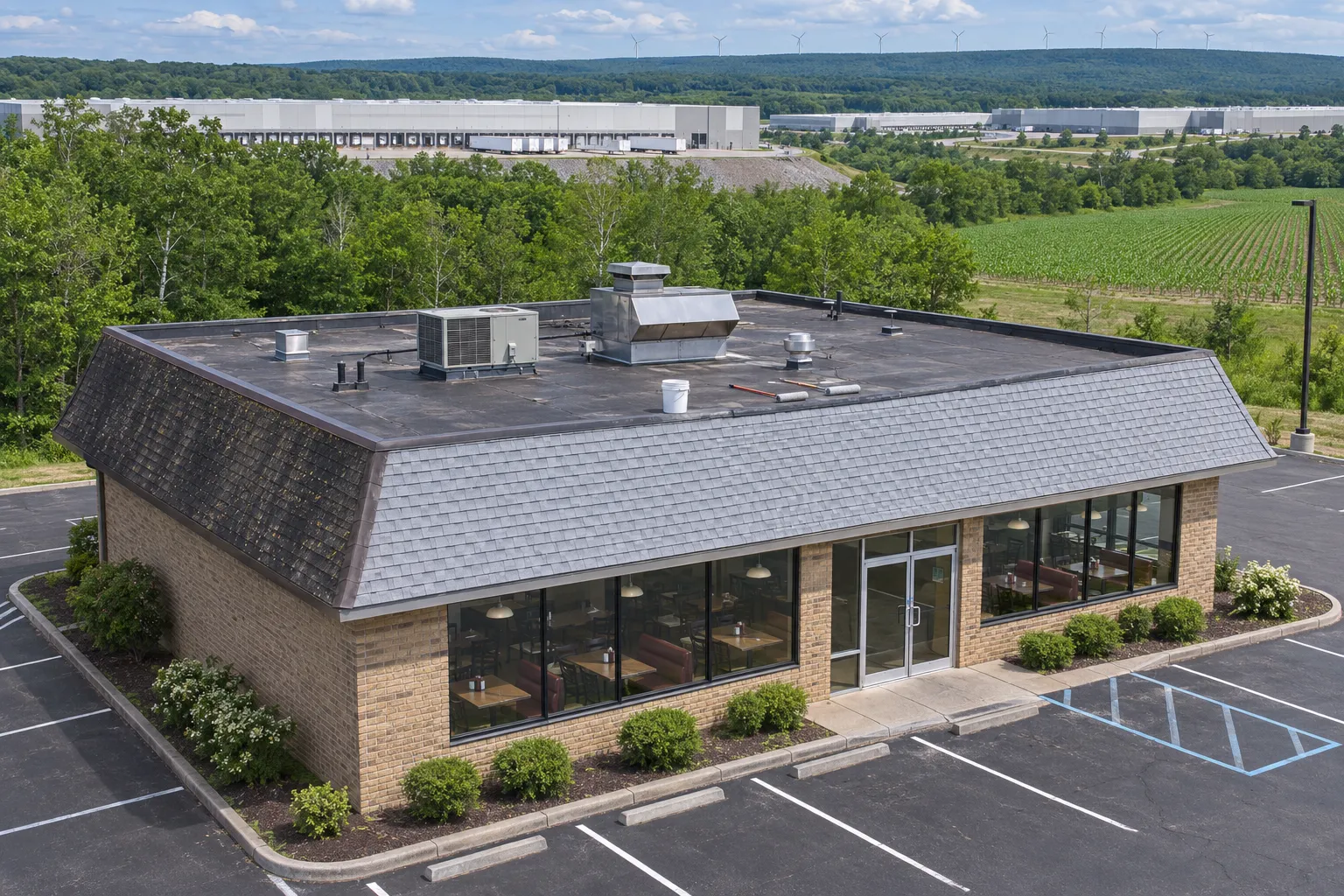
Workshop roofs hide their problems from the ground. These four turn up most often.
Tracing leaks and planning access first makes the coating pay off. Here is how.
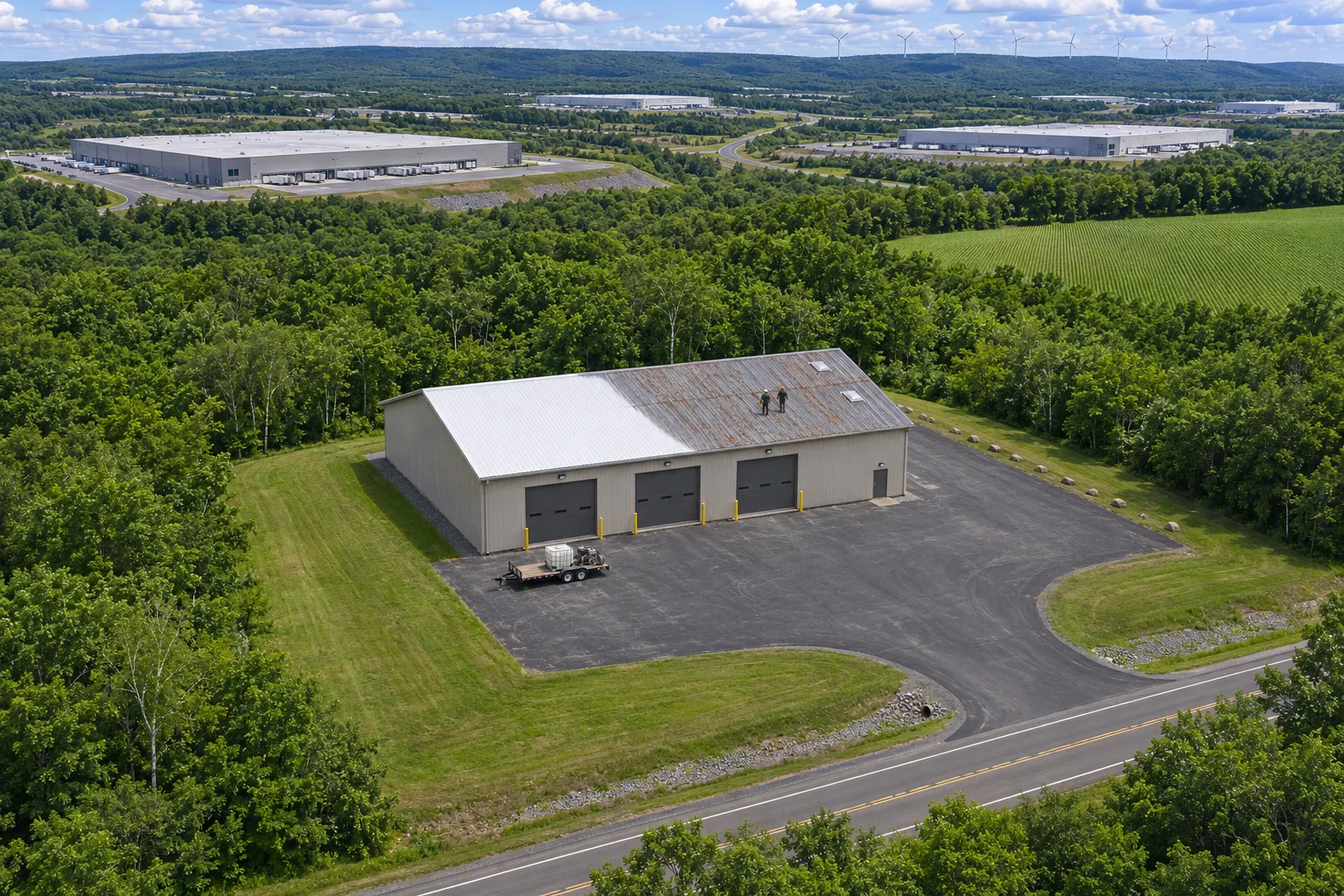
Tracing from inside finds the real entry point behind the drip. The leak map from the inspection shows where each drip came from.
Crowded vents and flues get proper flashing that the coating ties into. Each flue and vent gets a flashing detail sized to its pipe.
Staging away from shop doors keeps tools, trucks, and staff moving. Material lifts are timed around deliveries to the shop.
A light topcoat reflects sun off the roof over the shop floor. Heated shops also hold warmth better when foam is added.
Workshop roofs fit one of these coating paths.
All screws, laps, penetrations, and rust repaired, then two coats across the roof. Every leak traced inside is matched to a repair on the roof.
Crowded vents and flues get rebuilt flashing first, with the field coated after. Penetration clusters are reflashed one at a time to keep each joint tight.
Pitched shop roofs that drain quickly take acrylic in dry weather. Acrylic work is booked for dry stretches with mild nights.
Heated shops that lose heat through the roof can take spray foam with a topcoat. The foam topcoat carries granules on paths to vents and units.
A planning range is the first step to tracing and fixing them. Start here.
Access and leak tracing come before any prep on a workshop roof.
We walk the panels, perimeter, and penetrations, and go inside to trace each drip back to where water enters. Stains inside are marked so they can be checked after the work.
Lift or ladder positions, a staging spot, and any overhead lines are worked out with you. The staging spot is kept clear of shop doors and parking.
Flues, vents, and curbs are reflashed, and screws and laps are sealed. Crowded vents get their flashing work one penetration at a time.
Rust is primed, the roof is cleaned, and base and top coats go on at full thickness. Coverage around each penetration gets a second pass.
A short list of where each leak came from helps with any future check. Those marked stains are rechecked after the first heavy rain.
Catasauqua is on our list of towns served from Hazleton. Somewhere else? Ring us or drop us a message.
Warehouse bays coated in phases with tight stopping points.
Bottling roofs prepped with product and intakes protected.
Rusted-through shop panels replaced before the coating.
Edge metal, gutters, and closures repaired on block roofs.
Answers for workshop and small shop owners.
Safe access to the panels, perimeter, penetrations, and a material staging area. We identify overhead obstructions and equipment that block prep around flashing, and ask for access to the interior so existing leaks or moisture are found before the roof surface is covered.
Agreeing on those points before the work starts keeps the job moving once crews arrive.
Rarely. Work happens on the roof, staging stays away from shop doors, and spraying near open doors switches to rolling. Coating odor near open doors is managed by timing and by rolling instead of spraying.
Start inside, where the drip lands, and follow stains along purlins and insulation. Then match that path to screws, laps, and penetrations on the roof above. Matching the stain inside to the detail above is the step most often skipped on rushed jobs.
Ask for a roof walk before any price, a written list of repairs, and the coating system and thickness in writing. A clear answer about wet insulation and rusted panels is a good sign the inspection was thorough.
Lines near the eave change where lifts can go and how material gets up. We note them during the inspection, keep the required distance, and ask the utility about covers or shutoffs when work has to happen close to them. Lower interior temperatures in summer help both staff and stored materials.
A light topcoat reflects sun the bare panels would absorb. Foam adds insulation as well, which also helps heated shops in winter.
Get a planning range, or call to set up access and a leak trace on your workshop roof.