
Hidden Water
Wet Insulation Under The Roof
- You See
- Soft spots underfoot or high moisture meter readings.
- What It Means
- Foam over wet material traps the water. Those areas are cut out and replaced first.
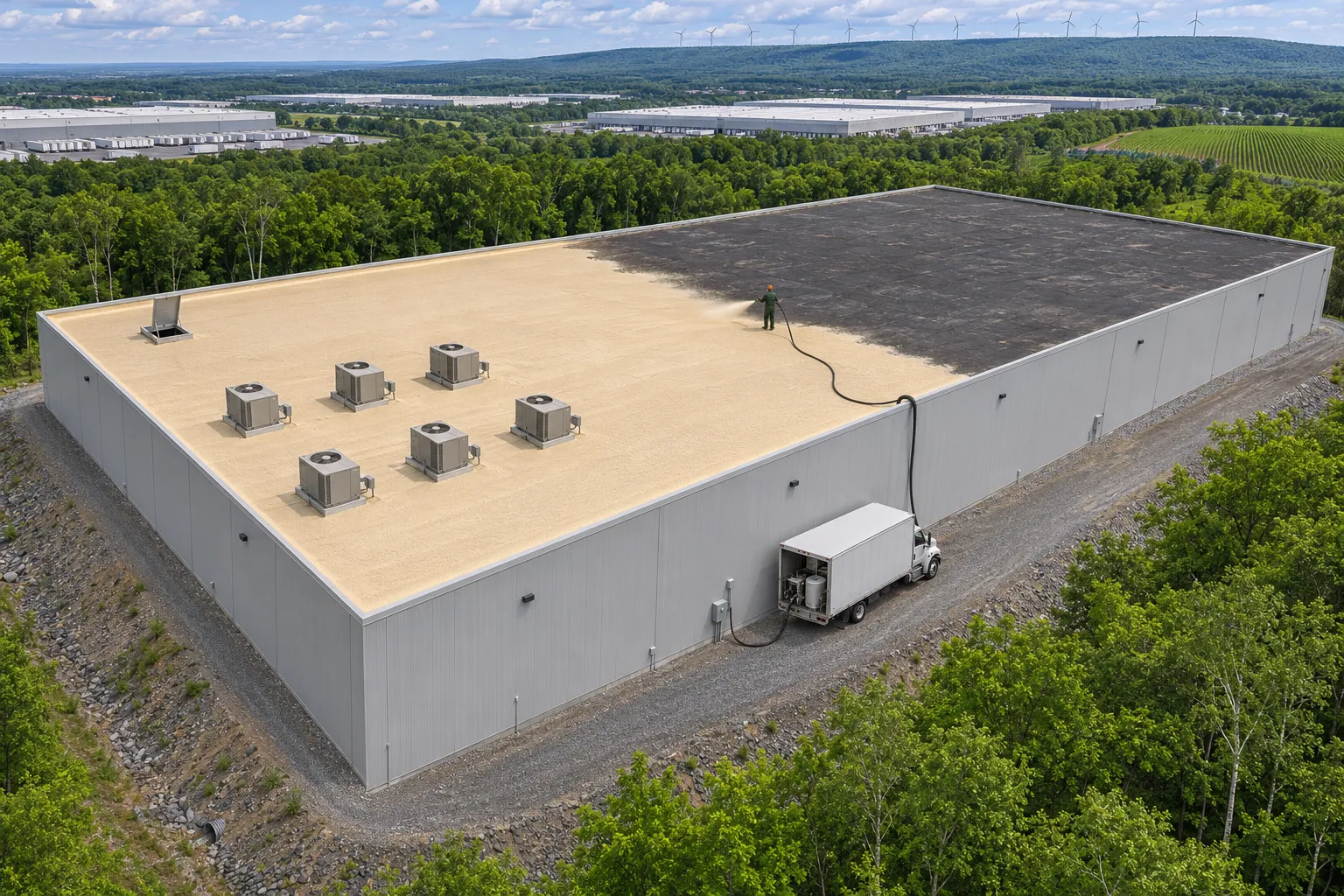
As a Hazleton spray foam roofing contractor, we spray closed-cell foam over flat and metal roofs and seal it with a protective topcoat.
Hazleton spray foam roofing works over dry, well-attached roofs. Line your roof up against each row.
| Roof Detail | Good Fit | Fix First Or Rethink |
|---|---|---|
| Substrate | Dry metal, built-up, or single-ply | Wet insulation or soft deck |
| Attachment | Panels and deck firmly fastened | Loose sheets or failed purlins |
| Insulation Goal | Want more insulation value | No change needed |
| Surroundings | Room to control overspray | Cars and intakes tight to the roof edge |
| Drainage | Can be tapered to drain | Structure sagging into ponds |
Foam hides a lot of roof under one layer. These conditions get dealt with before it does.
Foam jobs differ by what goes under it and what goes over it. These are the common setups.
Corrugations are filled and the screw rows buried under one layer, with a topcoat over the whole roof. Foam depth at the ribs is checked with probes as the work moves.
A dry built-up or single-ply roof gets foam directly over it, keeping the old roof out of the landfill. Moisture readings across the old roof come first, so only dry areas stay under the foam.
Extra foam depth near ponding areas sends water toward the drains. Tapers are planned on a roof sketch before spraying starts.
A dry, firmly attached foam roof with a worn topcoat gets cleaned and recoated. Blisters and punctures get cut out and refilled before the new topcoat goes on.
Foam does two jobs at once: it seals the roof and adds insulation.
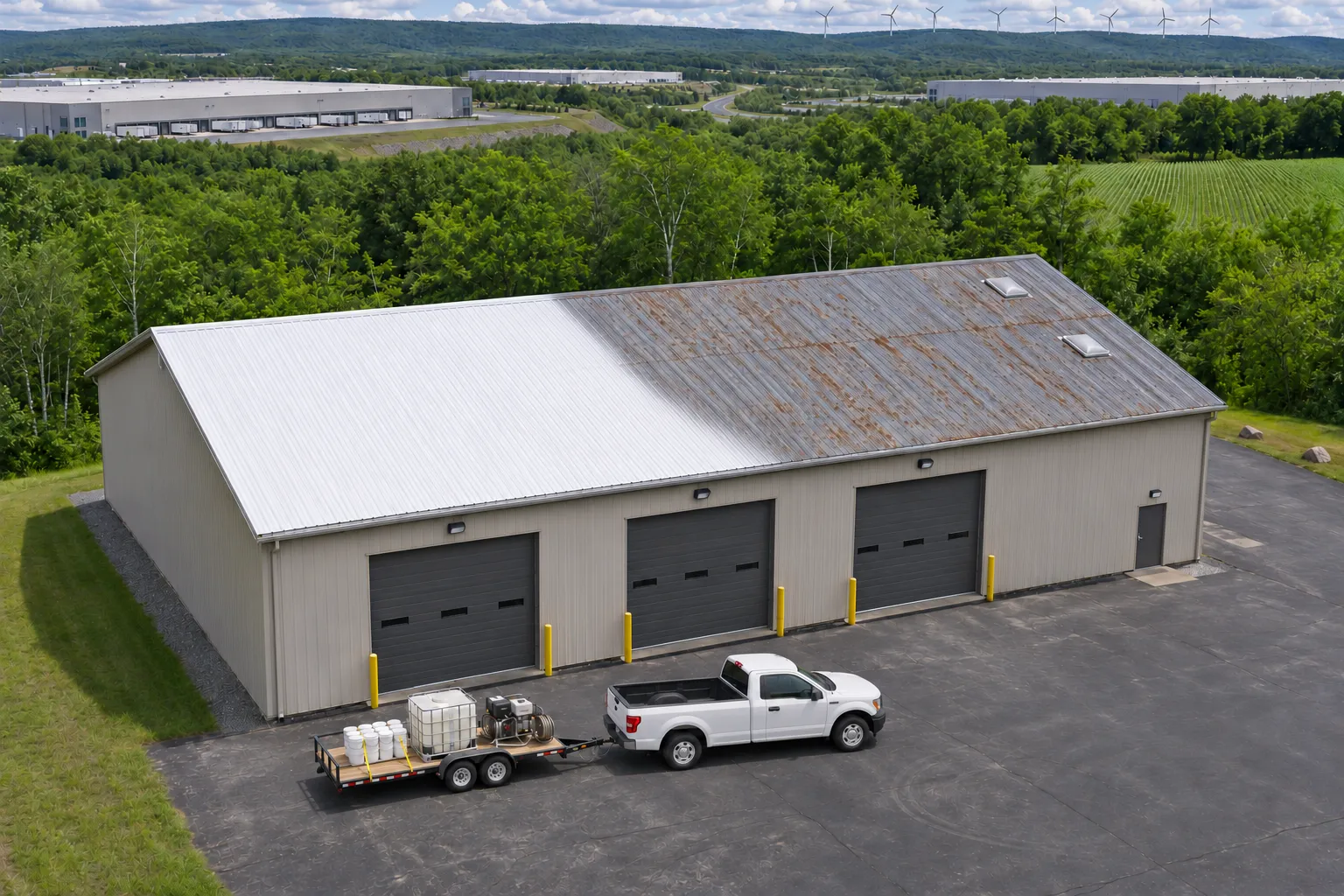
Laps, screws, and old patches end up under one continuous surface. Old patches, fastener rows, and laps all end up under the same surface.
Closed-cell foam raises the insulation value of the roof without opening the deck. Heated shops and cold storage buildings tend to notice the change most.
Compared with a new roof assembly over the old one, foam adds little weight. That matters on older buildings where framing was sized for a light roof.
Depth can be adjusted to move water toward drains and away from low corners. Ponding rings around drains are usually the first places to get extra foam depth.
Foam addresses both at once on many flat and metal roofs. Get a planning range for yours.
Foam needs a dry roof, light wind, and careful staging. These steps keep it under control.
Moisture readings, core checks where needed, and a look at attachment, curbs, and drains decide whether foam can go over the existing roof. Readings are marked on a sketch of the roof.
Air intakes are covered or shut, nearby cars moved, and wind is watched through the day to keep overspray on the roof. Spray days are picked with light wind in the forecast.
Wet sections are replaced, loose metal fastened, and the roof cleaned and dried so the foam bonds. Loose screws are tightened so panels stay still under the foam.
Closed-cell foam goes on in passes to the planned depth, checked with probes as the work moves across the roof. Edges and curbs get extra passes to build the right depth.
A topcoat goes on within days, with granules on walk paths, to shield the foam from sun and foot traffic. Granule paths follow the routes to units and drains.
Roofs that need no added insulation may suit these.
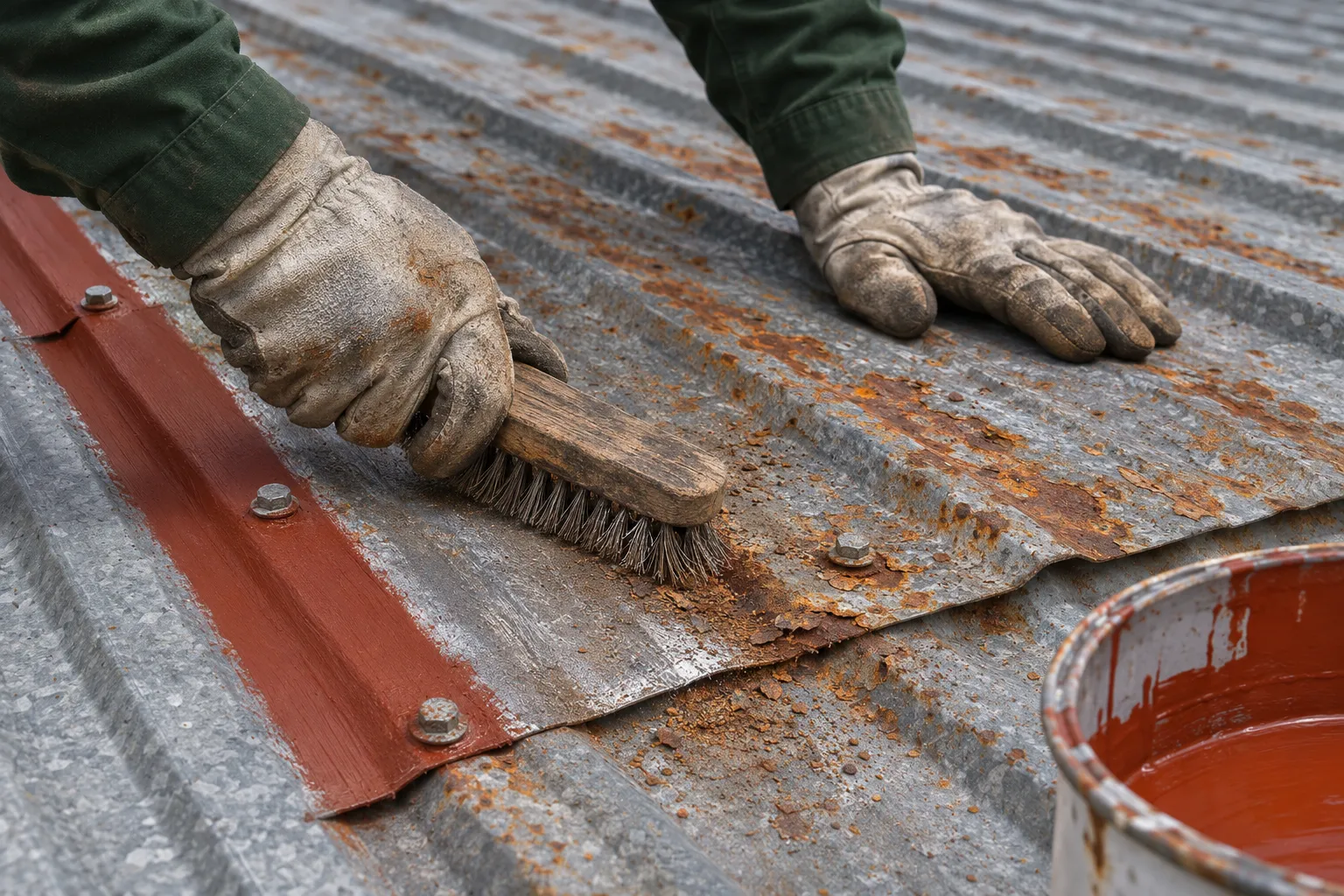
Screws, laps, and rust repaired, then steel panels coated.
Hazleton Commercial Metal Roof Coating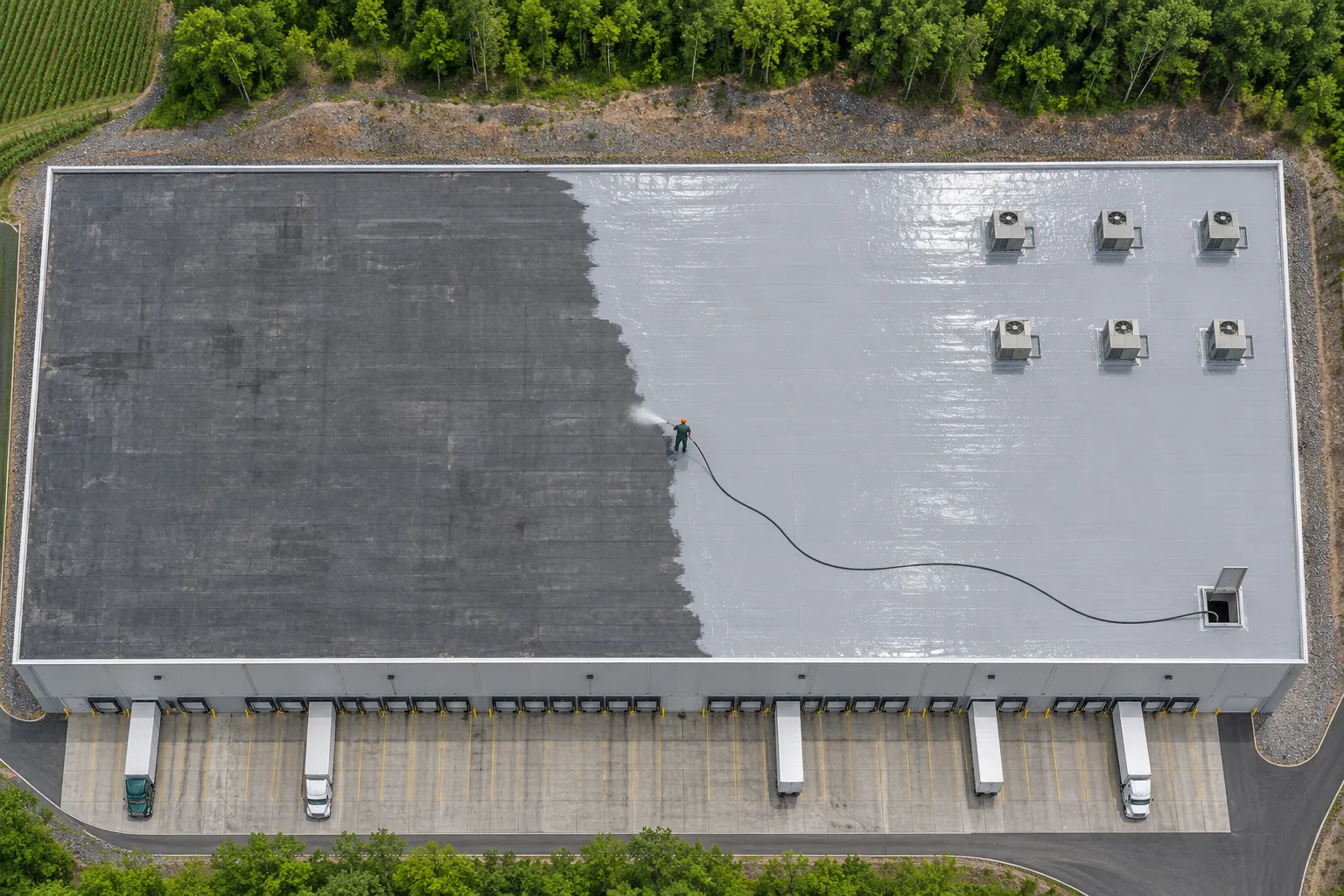
One thick, flexible layer for roofs that hold water.
Hazleton Silicone Roof Coating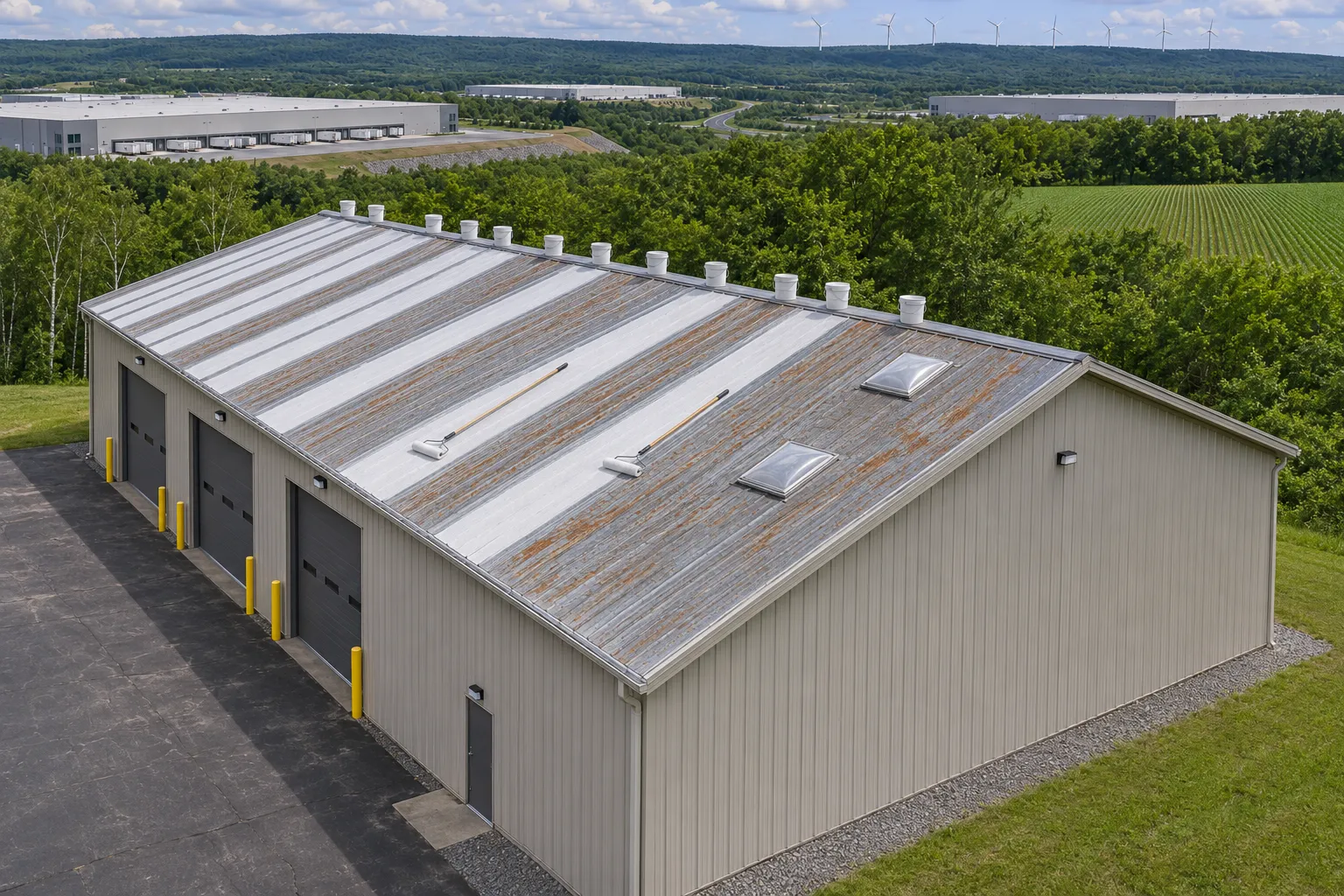
Water-based coats with fabric at seams on draining roofs.
Hazleton Acrylic Roof Coating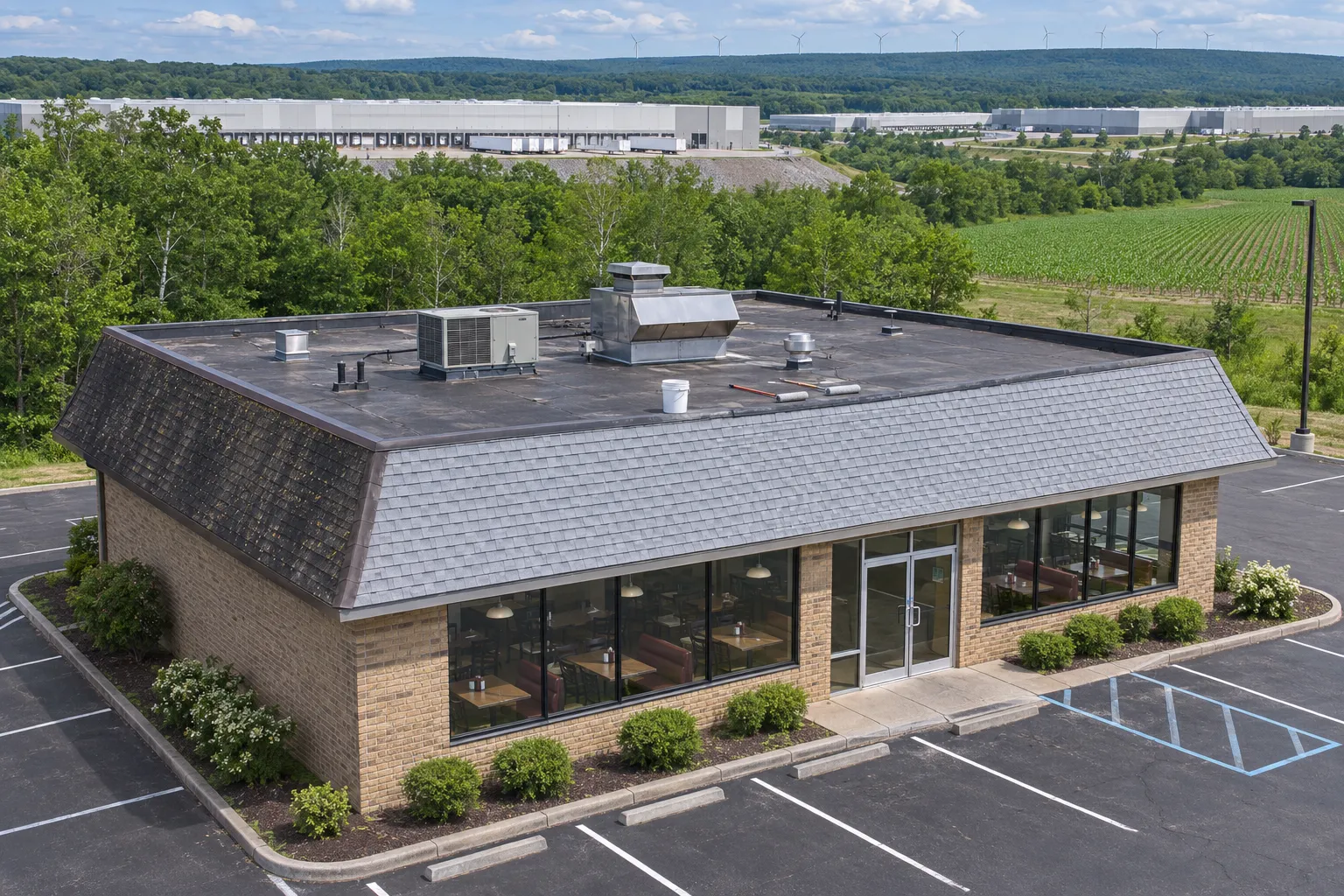
Coating for healthy commercial shingle faces, maker approved.
Hazleton Shingle Roof CoatingWhat owners ask before choosing foam.
It does when the leaks come from screws, laps, and seams that foam can cover, and the panels underneath are dry and firmly attached. Leaks from failed curbs, rusted-through sheets, or wet insulation need repair first, or the foam just covers the problem.
A moisture survey before the job tells you which areas need repair before any foam goes down.
A foam roof keeps working as long as its topcoat protects it from sunlight. Topcoat thickness, hail, foot traffic, and how quickly small damage is patched all decide that. Regular recoating is what keeps the foam itself in service. Yearly checks of the topcoat, especially after hail, catch small damage before it reaches the foam.
Wet materials, uneven panels, and hard access. For comparison, coating plans out at about $2.50 to $4.00 per square foot of roof and replacement at about $5 to $8; a foam assembly adds foam depth and substrate repairs on top of that. An inspection with moisture readings turns that uncertainty into a clear scope and price.
Foam can be part of the fix once the curb detail itself is repaired. We check panel movement, fastening, and hidden moisture at the curb first. Spraying across a joint that still moves only seals it for a short time. Curbs often get rebuilt taller so the foam layer still leaves enough flashing height above it.
Yes, as long as the foam stays dry and firmly attached. We check exposed foam and damaged spots, repair them, and renew the topcoat. Wet or deteriorated foam is cut out and replaced rather than sealed under another layer. Catching a worn topcoat early keeps recoating simple and keeps the foam itself dry.
Get a planning range for foam on your roof, or call to book moisture readings and an inspection.