
Exhaust
Residue Around Process Fans
- You See
- Sticky film or staining around exhaust fans and vents.
- What It Means
- Residue blocks the bond. It is cleaned off and the exhaust path is looked at.
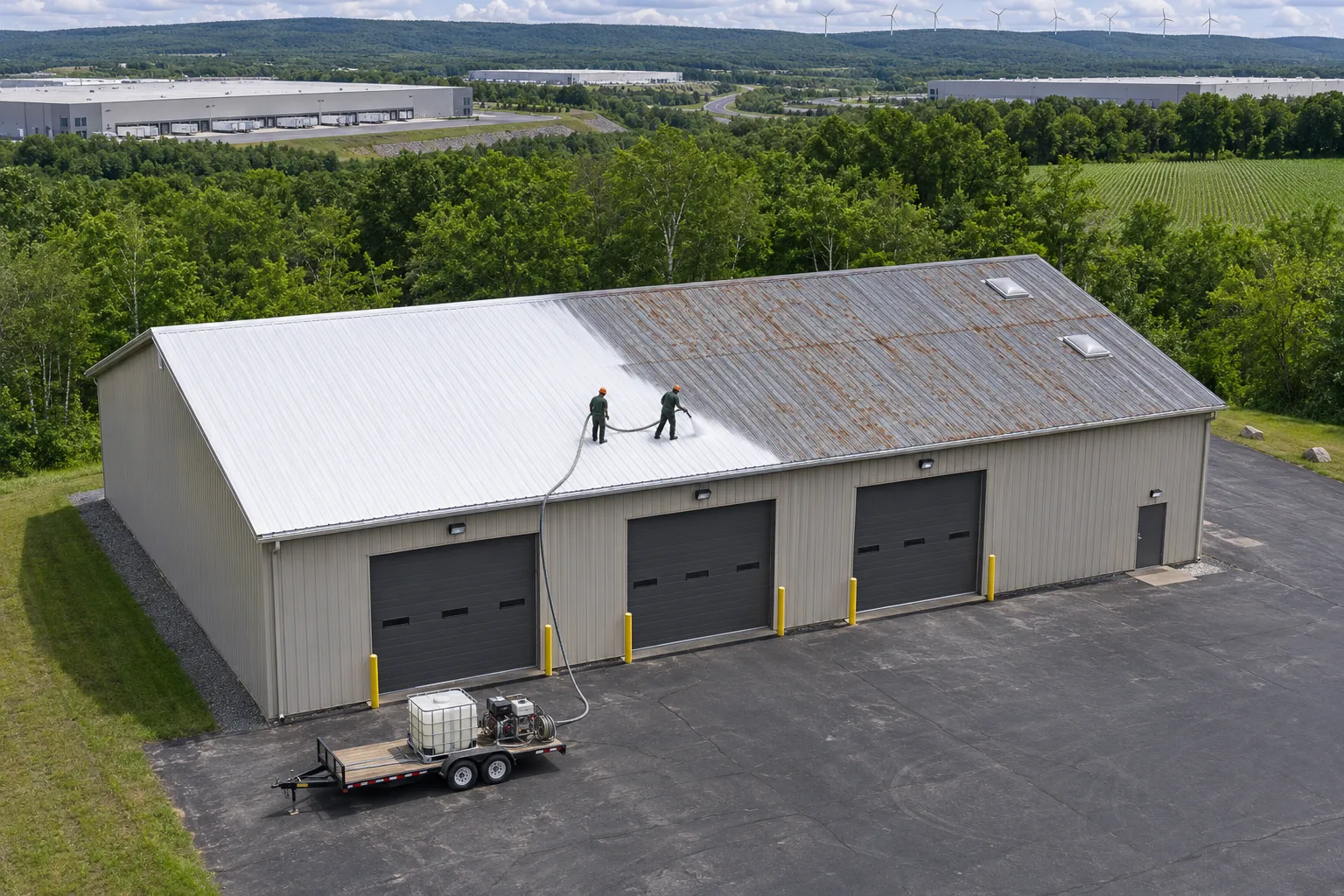
As a Berwick metal roof coating contractor, we coat roofs over bottling and beverage operations with prep, wash water, and overspray kept clear of what sits below.
Berwick metal roof coating on a bottling or beverage building is planned around what sits under the roof. Before work starts we go over intake locations, dock doors that stay open, wash water, and spray or roll methods with the facility manager. Any detail opened for repair is closed again before the crew leaves.
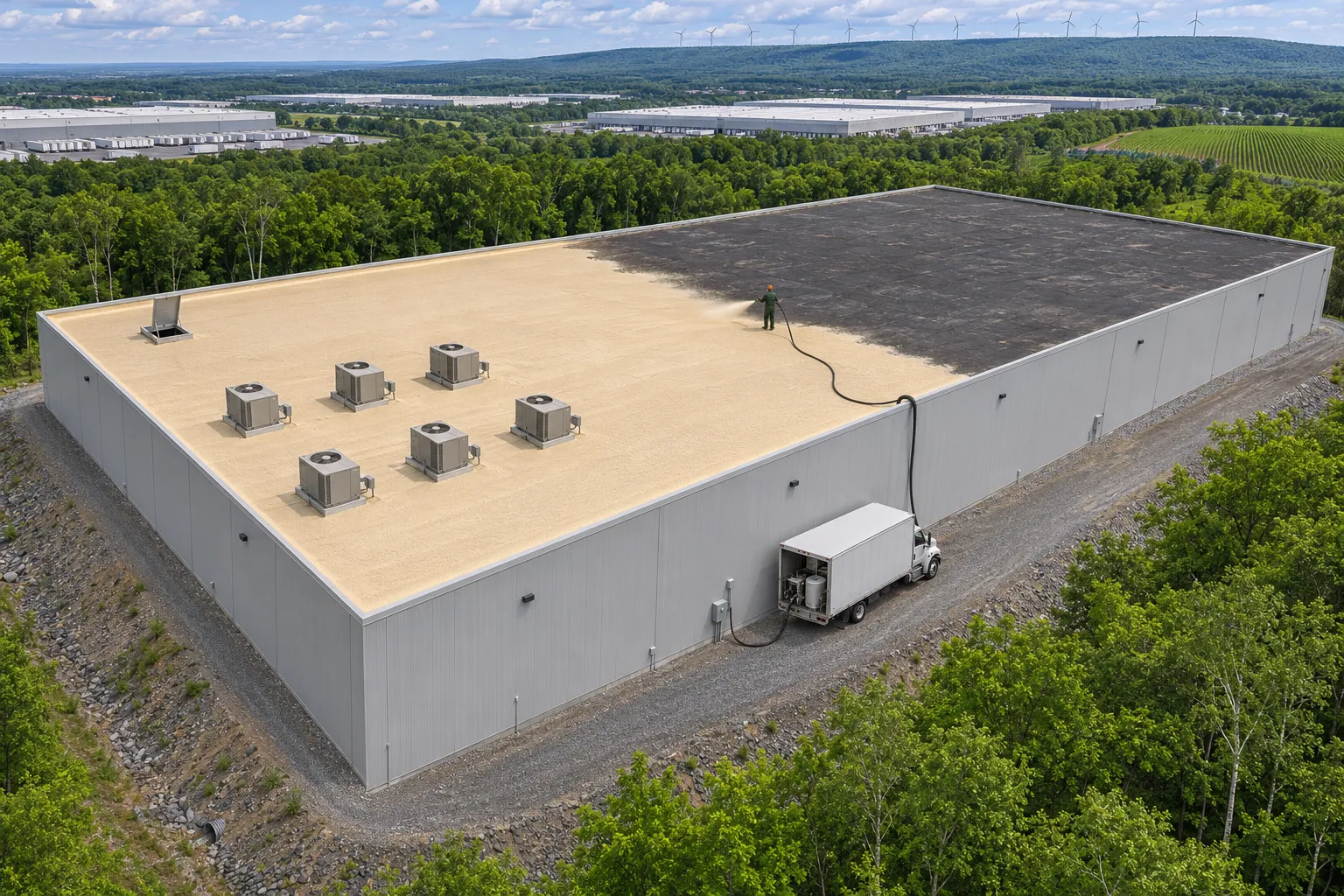
Plant roofs carry equipment and exhaust that change the prep. These four come up most.
A coated roof over a plant protects more than the building. Here is what changes.
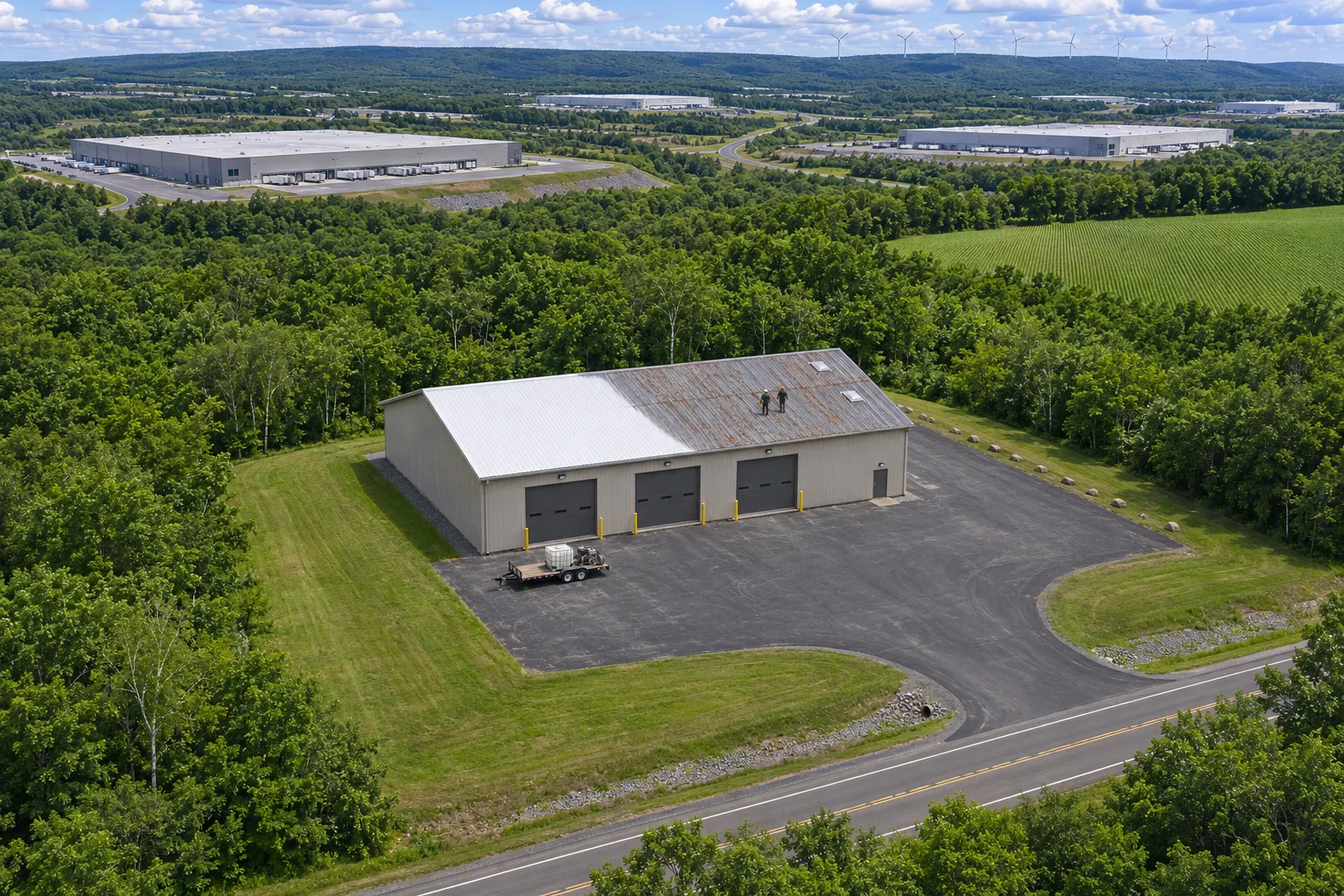
Sealed screws and laps stop water landing on pallets and packaging lines. Packaging lines and pallets below the worst leaks see the change first.
Work is staged so grit and old sealant stay on the roof and off the floor. Debris is bagged on the roof and lowered, rather than swept toward the edge.
Unit and fan curbs get rebuilt flashing that the coating ties into. Vibration from units is accounted for with flexible fabric at each curb.
A light topcoat reflects summer sun and helps keep warehouse space cooler. Warehouse space next to production benefits most on hot afternoons.
Plant roofs take a coating method that fits the operation below.
Areas near intakes and open doors are rolled instead of sprayed to keep coating on the roof. Rollers also give more control along roof edges above loading docks.
Wide open sections away from intakes are sprayed when wind allows. Wind is checked through the day, and spraying stops if it shifts toward intakes.
Low areas near equipment that hold water take silicone. Granule paths to air units keep technicians from wearing through the coating.
Screws, laps, curbs, and rust get repaired across the roof before coating. The full restoration is zoned so each part closes tight before the next opens.
A planning range helps you schedule the work around production. Start here.
Plant work adds a planning meeting and daily close-out to the usual coating steps.
We map intakes, fans, and curbs, check screws and laps, and look inside for drips over product and packaging areas. Roof drains and canopy gutters are checked at the same time.
Work zones, spray or roll areas, intake shutdowns, and wash water routes are agreed before anything starts. Contact names for each shift are written into the plan.
Curbs, screws, and laps are repaired, residue is removed, and debris is caught at each work area. Residue from exhaust fans is degreased before coating.
Each zone is coated with the agreed method and closed before the crew moves on. Zone edges are sealed where they meet the next section.
Every opened detail is sealed and intakes are uncovered at the end of each day. A short note to your supervisor lists what is planned for the next day.
Berwick is part of the area we serve from Hazleton. For a building outside these towns, call us or leave us a message.
Warehouse bays coated in phases with tight stopping points.
Rusted-through shop panels replaced before the coating.
Workshop roofs opened up and leaks traced first.
Edge metal, gutters, and closures repaired on block roofs.
Answers for plant and warehouse managers here.
By keeping roof prep separate from what is stored below. We plan intakes, open dock doors, wash water, and application methods with the facility manager, take extra care where cleaning could shake loose debris, and keep the building closed whenever a roof detail is opened.
A short written plan for each work zone is shared with your supervisors before day one.
The coating is the same; the planning is not. Exhaust residue, rooftop air units, and product below the roof add steps to cleaning, staging, and daily close-out. Production schedules decide which zones are done on which days.
Usually, yes. Work is zoned, debris is caught, and opened details are closed before the crew leaves. Where a repair needs the deck opened over product, that area is covered first. Tarps and drop sheets inside catch anything that falls while a deck section is open.
Yes. Small plants and storage buildings in Berwick get the same inspection, written scope, and protection plan as large ones. The size of the building changes the schedule, while the steps stay the same.
Tell us your audit dates and we set the work zones around them. Prep that raises dust or debris is kept away from those weeks, and the roof above sensitive rooms is finished before the auditors arrive. We confirm intake locations with your maintenance staff during the inspection.
Intakes near the work are covered or shut while coating goes on nearby, and low-odor products are chosen for sections above occupied space.
Get a planning range, or call to set up an inspection with your facility manager.