
Weather
Rust Bleeding Through Paint
- You See
- Orange spots coming through old paint on ribs and laps.
- What It Means
- Rust stains acrylic from below. It is cleaned off and spot primed with a stain-blocking primer.
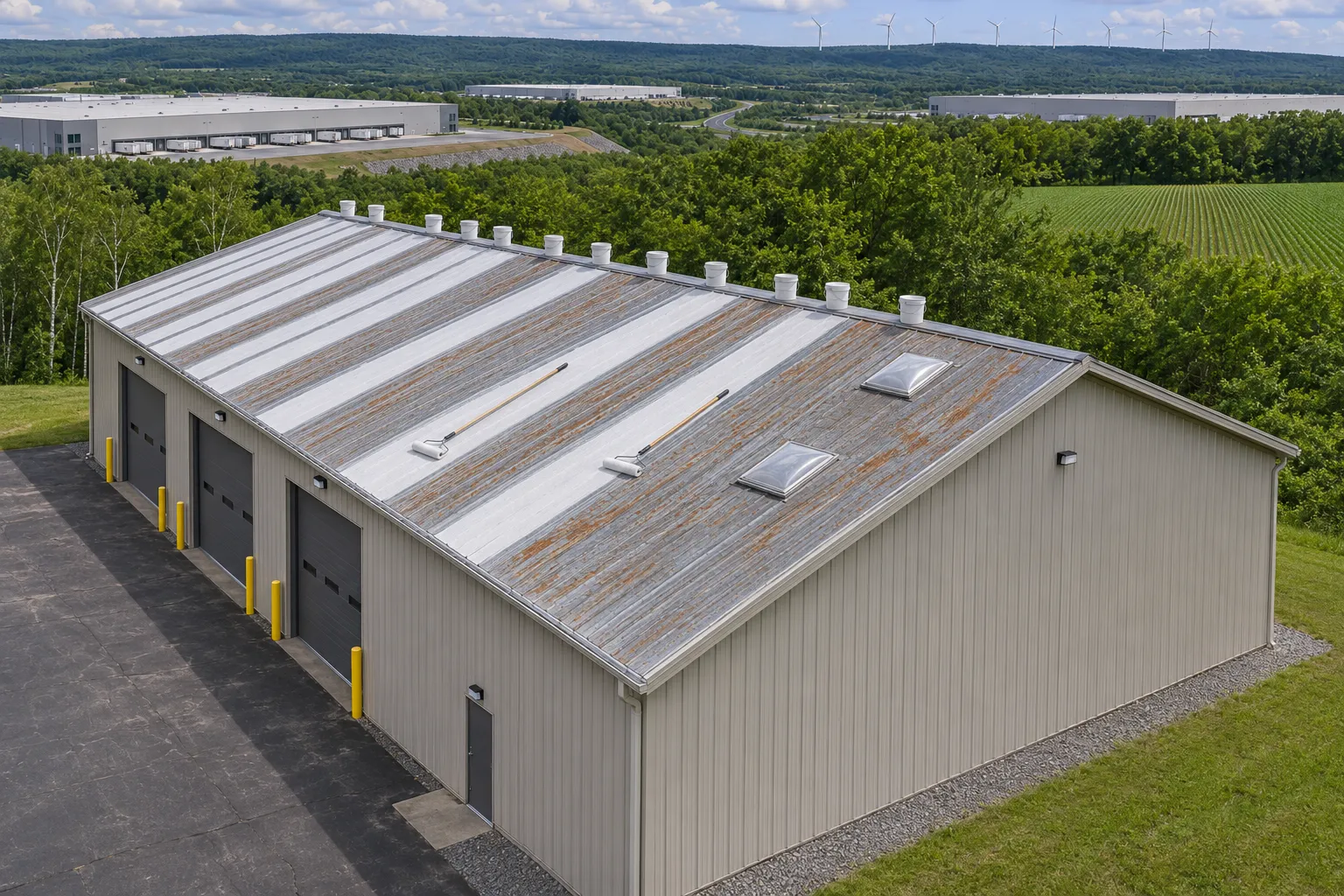
As a Hazleton acrylic roof coating contractor, we coat pitched metal and fast-draining roofs on shops, warehouses, and retail buildings with fabric at every seam.
Hazleton acrylic roof coating suits roofs that shed water quickly. Check your roof against each row.
| Roof Detail | Good Fit | Choose Another System |
|---|---|---|
| Slope | Pitched panels with steady runoff | Dead-flat areas |
| After Rain | Dry within hours | Water standing next day |
| Surface | Metal, older acrylic, or foam | Cured silicone |
| Work Window | Dry, mild days ahead | Rain or frost in the forecast |
| Budget Plan | Recoat every so often | One coat for the long haul |
Acrylic depends on good prep and good weather. These conditions shape both.
Acrylic systems differ in build and finish. These four cover most sloped commercial roofs.
A tinted base and a white topcoat let the crew see missed spots during application on a pitched metal roof. Missed spots show up as tinted patches, so they get covered before the crew leaves.
Polyester fabric is bedded into acrylic at every lap, screw row, and curb before the field coats. The fabric goes into wet coating, so it bonds into the film instead of sitting on top.
An older acrylic roof is washed, spot repaired, and given a fresh topcoat over the existing film. Thin areas and bare ribs get spot coated before the full topcoat.
Pitched panels take acrylic while flat valleys that hold water take silicone at an approved edge. The line between the two products falls on a lap or valley edge.
Acrylic is the practical choice for many sloped metal roofs. Here is what it brings.
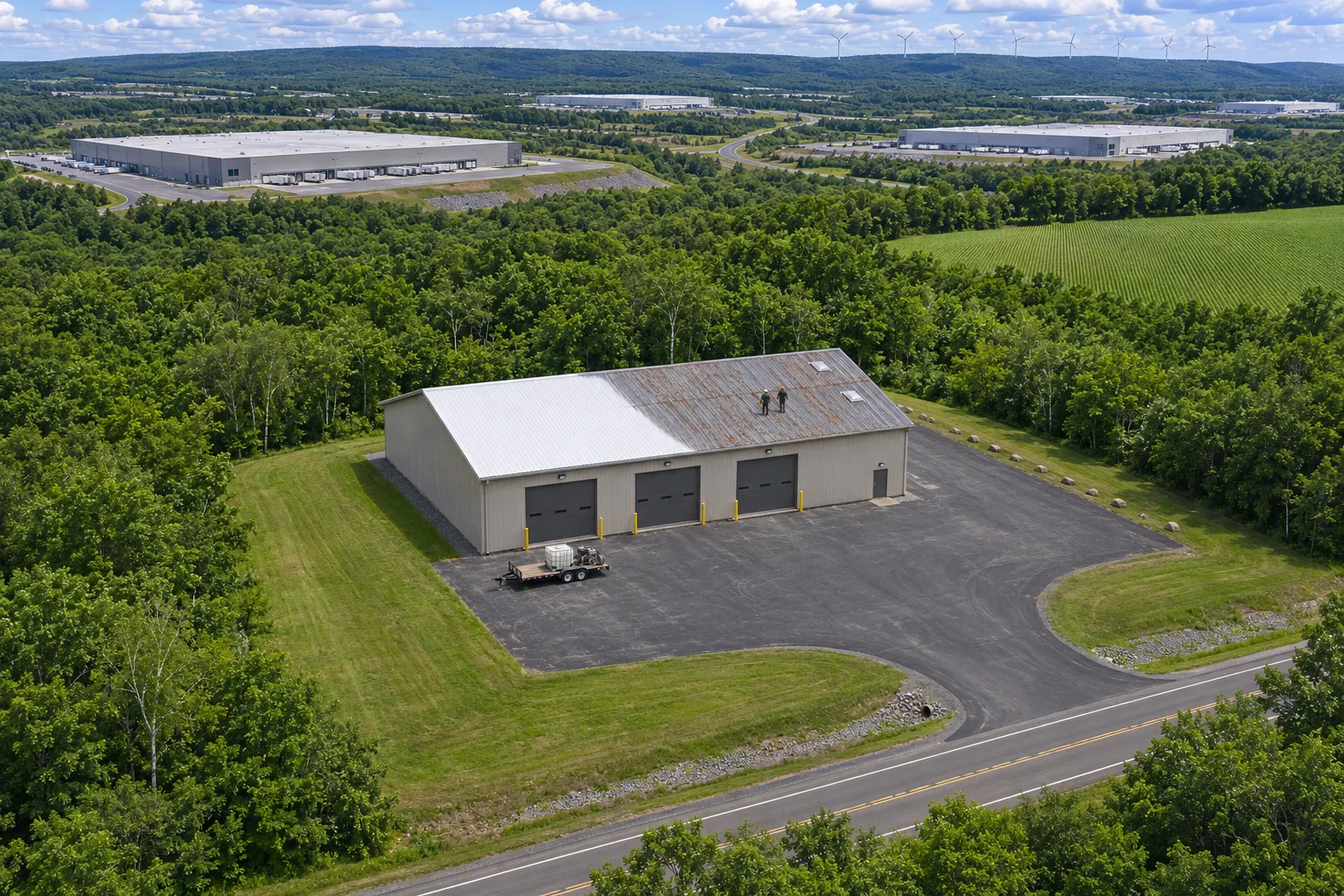
Per gallon, acrylic costs less than silicone, which helps on large pitched roofs. On large shops, the savings on material add up across thousands of square feet.
A worn acrylic roof takes a wash and a fresh topcoat without stripping the old film. The wash removes dirt and chalk so the new coat bonds to the old film.
A white topcoat reflects summer sun off the panels and holds that color well. South-facing slopes that bake all afternoon show the biggest change.
Some vapor passes through the film, so trapped moisture can leave the panel seams without lifting the coating. Seams and screw rows stay covered by fabric for the life of the system.
Acrylic work books into dry, mild stretches. Start with a planning range so the date is easy to set.
Acrylic goes on in layers, each one dry before the next, so weather sets the pace.
We check where water runs and stops, test screws and laps, and look for rust coming through the paint and any old silicone that acrylic will not grip. Gutter ends and eaves get a close look, since water collects there.
Rust is cleaned and primed, screws tightened or replaced, and fabric set into acrylic along laps, screw rows, and curbs. Every fabric strip is pressed flat so no air stays under it.
A tinted base coat goes on after the dew is gone and dries before evening, with no rain in the forecast. The base coat is checked for thin spots before the next day.
The white topcoat goes on the next dry day at full thickness, with extra coverage at panel ends and eaves. Ribs and panel ends get a second pass where coverage looks light.
You get the system details and an inspection schedule, so the roof is recoated before the film wears thin. Most acrylic roofs need a wash and fresh topcoat well before the base wears through.
Roofs that pond or need insulation often suit these instead.
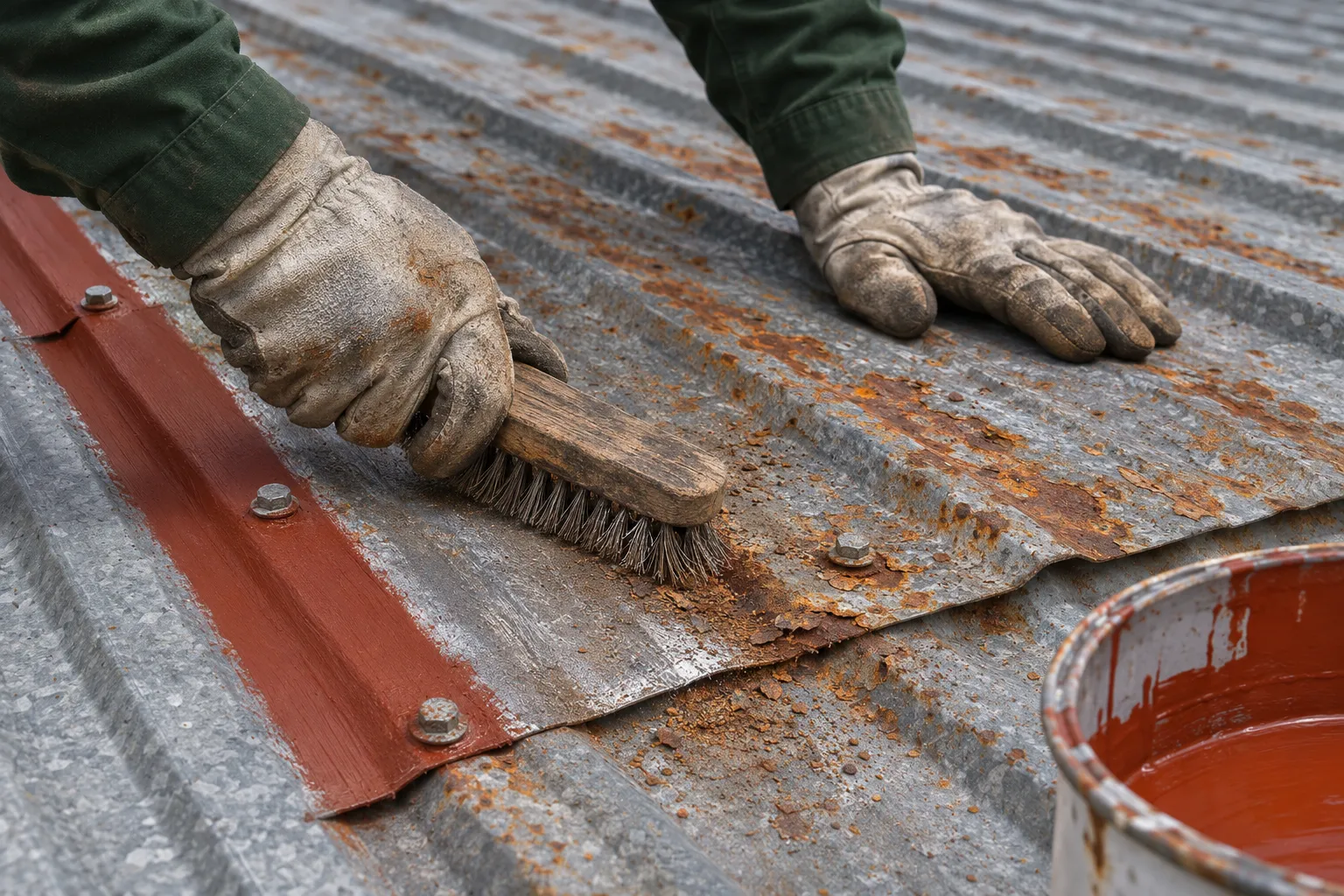
Screws, laps, and rust repaired, then steel panels coated.
Hazleton Commercial Metal Roof Coating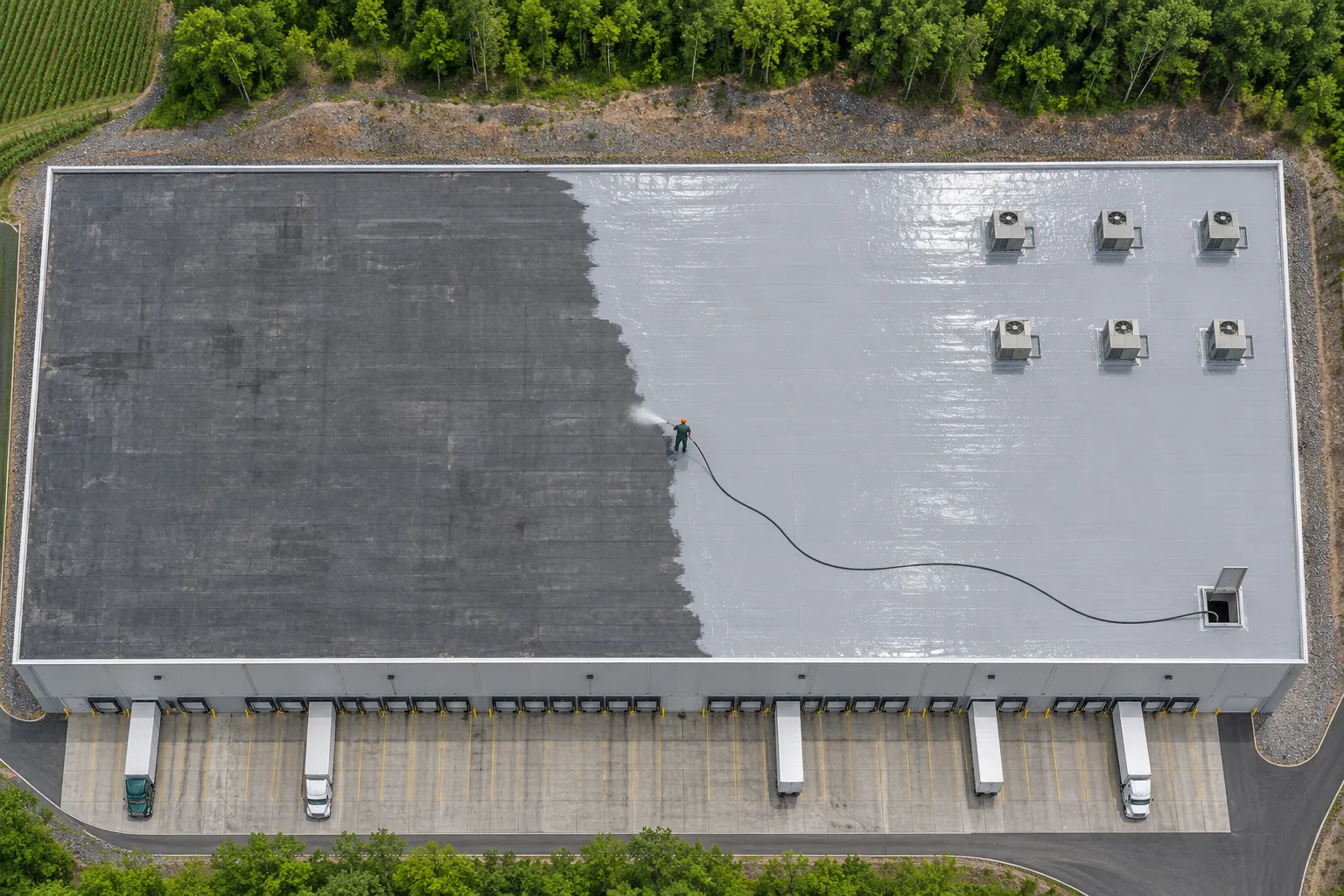
One thick, flexible layer for roofs that hold water.
Hazleton Silicone Roof Coating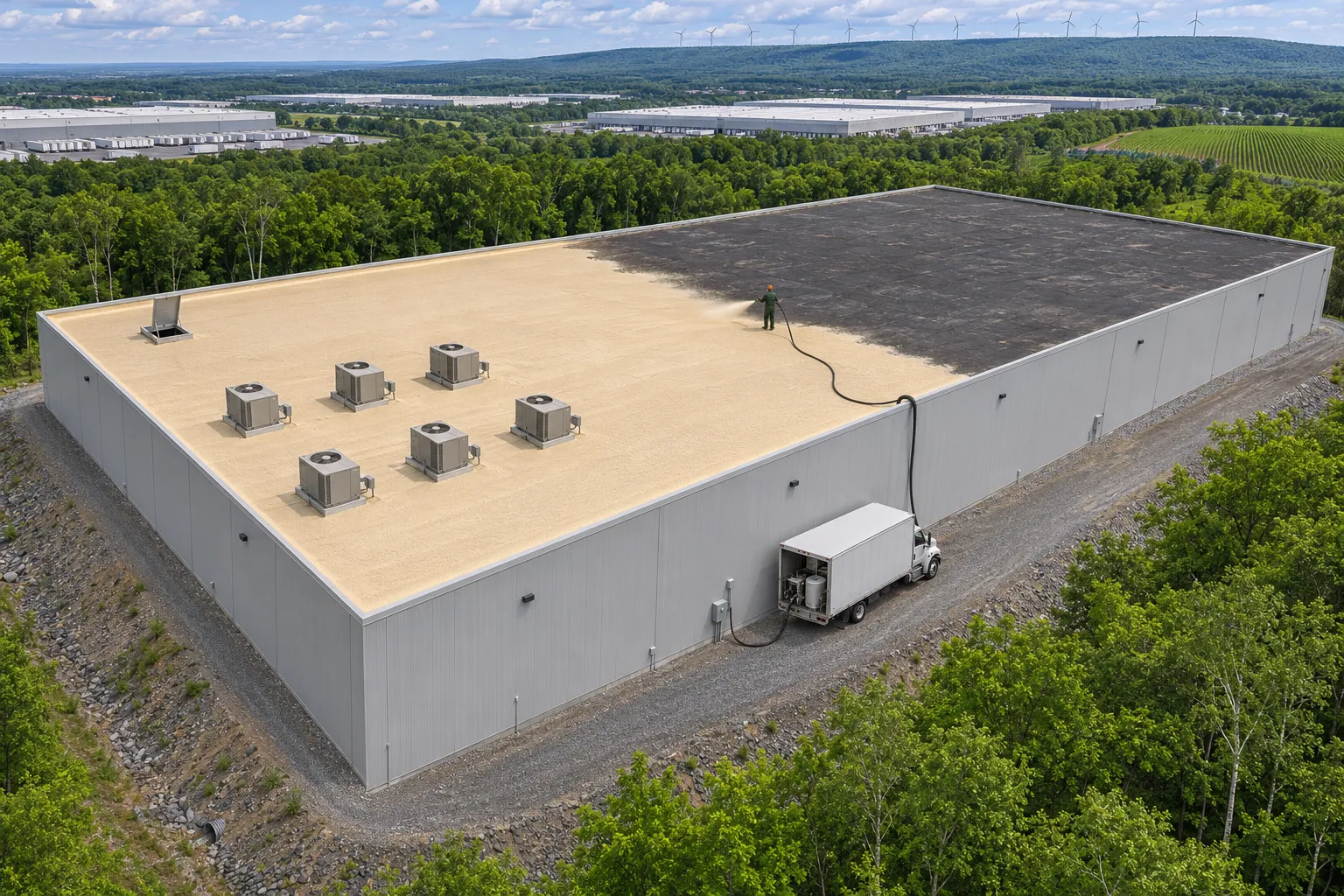
Sprayed insulation and a topcoat over flat and metal roofs.
Hazleton Spray Foam Roofing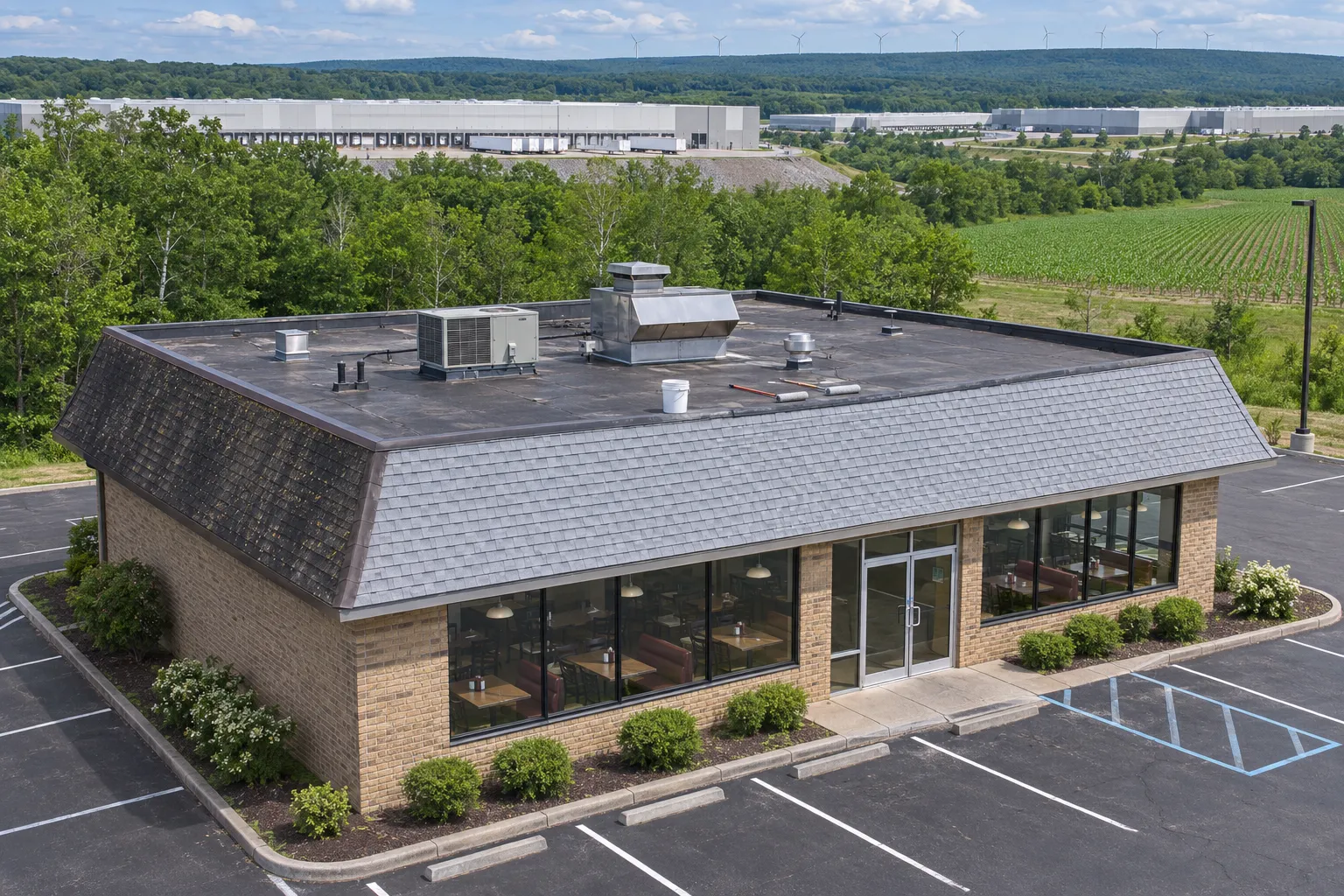
Coating for healthy commercial shingle faces, maker approved.
Hazleton Shingle Roof CoatingAnswers about acrylic on sloped and metal roofs.
Acrylic dislikes standing water, so low spots that hold rain need another system or a drainage fix. It needs dry, mild weather to cure, which narrows the work calendar. It also goes on in thinner coats, so reaching full thickness takes more passes than silicone.
A second look at those spots after the first year tells you how the roof is wearing.
Often, yes. Rusted areas need a rust-inhibiting primer, and some factory finishes need a bonding primer so the acrylic grips. An adhesion test on cleaned panels tells us which primer the roof needs before the order goes in. Factory-painted panels with a glossy finish are the ones most likely to need a bonding primer.
Area sets the baseline, and prep moves it. Coating plans out at about $2.50 to $4.00 per square foot of roof, against about $5 to $8 for replacement. Access, rust and seam work, fastener sealing, acrylic type, thickness, coat count, and penetrations decide where a roof lands.
Roofs with many curbs, skylights, and screw rows take more fabric work, which moves the price up.
Yes, if water stays on the roof longer than the product allows. We look at low areas and blocked outlets first. Fixing the drainage can make acrylic workable, while a roof that keeps trapping water points to silicone or a different repair.
A blocked gutter end is often the whole cause, and clearing it brings the roof back into range.
Look at adhesion, wear on the ribs, and the metal details underneath. Exposed metal, cracks at movement points, and rust near laps tell more than the date it went on. Checking the same spots each year shows how fast the film is wearing. Photos taken at each yearly check make the comparison easy.
Get a planning range for acrylic on your roof, or call to book an inspection before the next dry stretch.